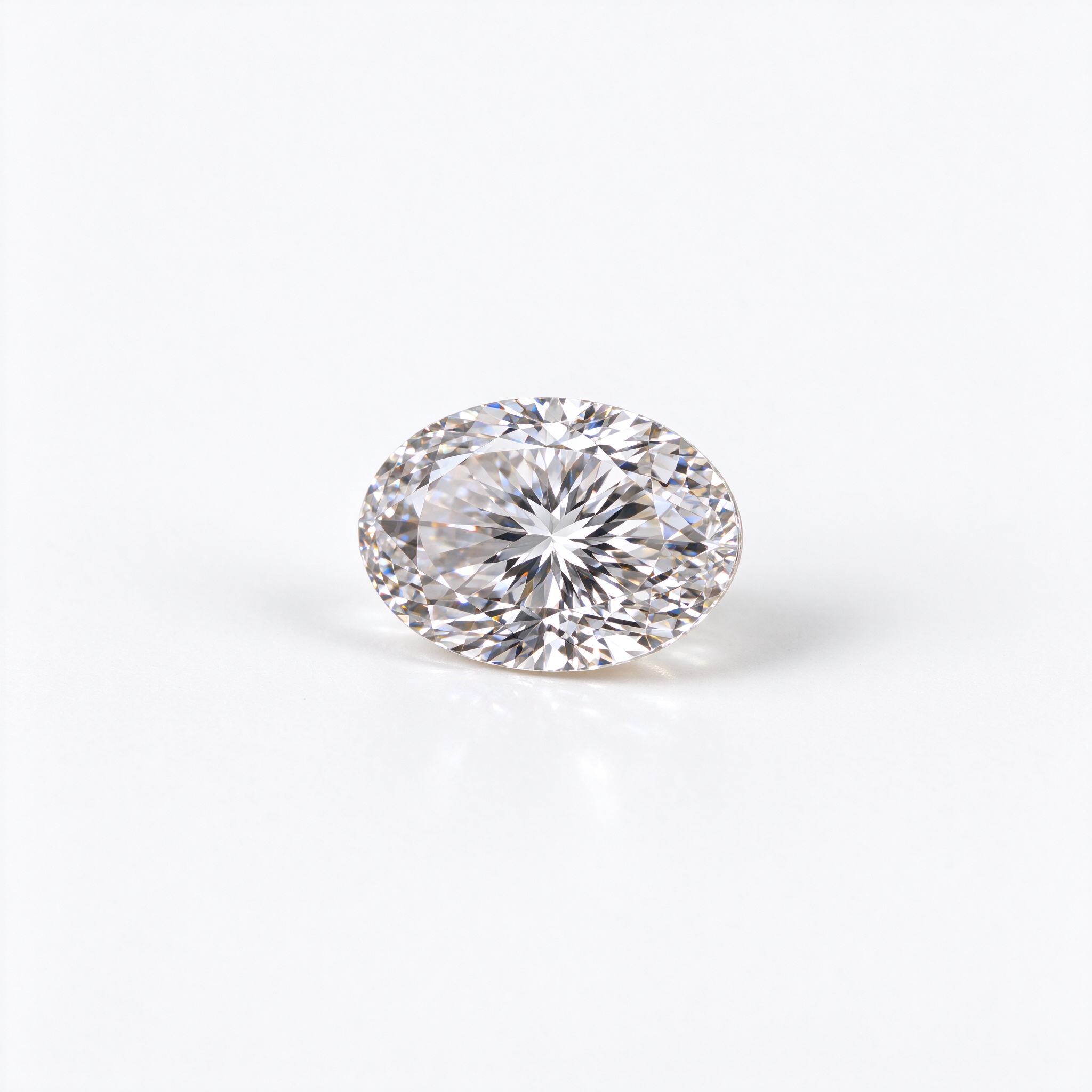
Why Oval Cut Has Exploded in Popularity
Five years ago, oval was a niche shape. Today, it is the second-best-selling engagement ring shape after round. The oval cut offers several advantages that modern buyers love:
- Apparent size: An 8x10mm oval looks larger face-up than an 8mm round of the same carat weight. Customers perceive more value.
- Elongation: The oval shape lengthens the finger, making hands look slender.
- Uniqueness: Oval is less common than round, so customers feel they have chosen something distinctive.
- Comfort: Oval rings sit lower on the finger and are less likely to catch on things than protrusive shapes.
Oval Cut Proportions That Matter
An oval moissanite is defined by its length-to-width ratio. This is the single most important decision when buying oval stones.
- Ratio 1.25:1 to 1.35:1: This is the "chunky oval" range. The stone looks plump and rounded. Many customers love this look, but it can appear too wide.
- Ratio 1.40:1 to 1.50:1: This is the classic elongated oval. It looks elegant and finger-lengthening. This is our recommended range for most buyers.
- Ratio 1.60:1 and above: This is the "narrow oval" or "marquise-adjacent" look. It is very elongated and polarizing. Some customers love it, others find it too thin.
At HOLYCOME, we stock oval moissanite primarily in the 1.40:1 to 1.50:1 range. This is the most universally flattering proportion and the easiest to sell.
The Bow-Tie Effect: What It Is and How to Avoid It
The bow-tie effect is the dark shadow that sometimes appears across the center of an oval, pear, or marquise stone. It looks like a dark bow tie. It is caused by light leakage through the pavilion when the cut proportions are not optimized.
Some bow-tie is normal in oval shapes. A faint bow-tie that disappears at different angles is acceptable. A strong, permanent bow-tie that is visible from every angle is a defect.
When buying oval moissanite, inspect the stone face-up under bright light. Tilt it from side to side. If the dark area disappears and reappears naturally, it is acceptable. If it stays dark regardless of angle, reject the stone.
At HOLYCOME, we sort our oval stones by bow-tie intensity. Our standard stock has a slight bow-tie that is within industry norms. On request, we can provide "no bow-tie" ovals that are cut to more exacting proportions. These cost slightly more but photograph better.
Oval Sizes That Sell Best
The most popular oval sizes for moissanite are:
- 6x8mm (1.25ct equivalent) - entry-level engagement ring
- 7x9mm (1.75ct equivalent) - our best-selling oval size
- 8x10mm (2.5ct equivalent) - premium oval
- 9x11mm (3.5ct equivalent) - statement oval
The 7x9mm oval is the sweet spot. It offers the elongated look at a price point that most customers can afford. Stock this size deepest.
Setting Considerations for Oval Moissanite
Oval stones look best in settings that emphasize their elongation:
- East-west settings: Setting the oval horizontally is a modern, fashion-forward choice.
- Halo settings: A halo of small round stones around an oval center increases the apparent size dramatically.
- Three-stone settings: Oval center with two pear or round side stones is a popular bridal look.
- Solitaire settings: A simple four-prong solitaire lets the oval shape speak for itself.
When pricing oval stones, expect to pay a slight premium over round of the same carat equivalent. The oval cut is more challenging to execute symmetrically, and the demand is strong.
The Length-to-Width Ratio: A Deeper Look
The length-to-width ratio is the single most important decision when buying oval moissanite, and it deserves a deeper explanation than the quick reference we gave earlier. The ratio is calculated by dividing the stoneu0027s length by its width. A 7x9mm oval has a ratio of 1.29:1. An 8x11mm oval has a ratio of 1.375:1. The ratio determines how elongated the stone appears on the finger.
At HOLYCOME, we cut our ovals in three ratio bands. The 1.30:1 to 1.40:1 band is our "chunky oval." These stones look full and rounded, almost like a round with slightly extended ends. They are popular with customers who want the oval look without the extreme elongation. The 1.40:1 to 1.50:1 band is our classic elongated oval, the best seller. The 1.55:1 to 1.65:1 band is our "slim oval," a fashion-forward look that is polarizing.
When buying stock, we recommend the 1.40:1 to 1.50:1 range. It flatters the widest range of hand shapes and finger lengths. For customers with short fingers, a slimmer ratio (1.50:1) lengthens the appearance. For customers with longer fingers, a chunkier ratio (1.35:1) balances the hand. If you only stock one ratio, choose 1.45:1.
Oval Moissanite in Different Metal Settings
Oval stones are exceptionally versatile because the elongated shape pairs well with every metal tone:
- White gold or platinum: The cool metal enhances the bright white fire of an E-F color oval. This is the classic engagement ring look. The elongation of the oval against a white metal shank creates a clean, modern aesthetic.
- Yellow gold: A yellow gold oval engagement ring has a warm, vintage feel. Pair an F color oval with yellow gold for a look that echoes antique Victorian jewelry. The warm metal and warm stone color blend seamlessly.
- Rose gold: Rose gold and oval is one of the most popular bridal combinations of the last five years. The pink metal softens the stoneu0027s fire and creates a romantic, feminine look. This combination photographs beautifully, which matters for social media-driven brands.
- Two-tone settings: An oval center in a rose gold bezel with a white gold shank is a modern design that combines warm and cool tones. These settings attract design-forward customers willing to pay a premium.
Common Oval Buying Mistakes and How to Avoid Them
The most common oval mistake is buying a stone with too strong a bow-tie. As we mentioned, some bow-tie is normal, but a dark permanent shadow is a defect. The way to check is simple: place the stone face-up under a bright overhead light. Tilt it slowly from side to side. If the dark bow-tie area fades and moves naturally, it is acceptable. If it stays dark and fixed, reject it. At HOLYCOME, we sort our ovals by bow-tie intensity. Our standard stock has a slight bow-tie within industry norms. On request, we provide "clean bow-tie" ovals for an additional cost.
The second mistake is buying an oval that is too narrow. A 1.70:1 ratio may look dramatic in the catalog, but on the finger it looks thin and unbalanced. Most customers prefer the 1.40:1 to 1.50:1 range. If a customer specifically wants a narrow oval, they will ask for it. Do not stock narrow ovals as default inventory.
The third mistake is ignoring the orientation in the setting. Oval stones can be set pointing up (toward the fingernail) or sideways (east-west). Most customers expect the point to face up. East-west settings are fashionable but less common. When selling an oval ring, show the customer both orientations. The orientation affects how long the finger appears.
The fourth mistake is buying oval stones without checking symmetry. Oval is an asymmetric shape by nature, but the two sides should mirror each other. Place the stone on a white surface and look straight down. Draw an imaginary line from tip to tip. The left and right sides should be roughly equal. If one shoulder is wider, the stone looks lopsided.
The fifth mistake is overstocking very large ovals. The 10x14mm oval is a dramatic size, but it sells slowly. Stick to the 6x8mm, 7x9mm, and 8x10mm sizes for 80 percent of your oval inventory. Reserve the large sizes for custom orders.
Frequently Asked Questions: Oval Moissanite
Q: Why does my oval have a dark shadow in the middle? A: That is the bow-tie effect. A slight bow-tie is normal in oval cuts. If it is very dark and permanent, the cut is poor. Our standard stock has a light bow-tie. We can provide no-bow-tie ovals on request.
Q: What length-to-width ratio looks best on short fingers? A: A slightly more elongated ratio (1.50:1) lengthens the finger. For shorter fingers, avoid the chunky 1.30:1 oval, which can look wide.
Q: Do oval moissanites look larger than round diamonds? A: Yes. An 8x10mm oval has a larger face-up surface area than an 8mm round. Customers perceive more size for the money, which is one reason oval is so popular.
Q: Can I get an oval with a hidden halo? A: Yes. A hidden halo (small stones underneath the center oval) adds sparkle from the side view without disrupting the clean top line. This is a popular option for engagement rings.
Q: Are oval stones more expensive than round? A: Slightly. Ovals are about 5 to 10 percent more expensive per millimeter because the cutting process is more complex and the demand is strong.