
Moissanite Is Not a Diamond Simulant: It Is a Distinct Material
Many people think of moissanite as a "fake diamond." This is misleading. Moissanite is a real gemstone with its own chemical composition, crystal structure, and physical properties. It is not an imitation of anything. It just happens to look brilliant and colorless, which is why it is often compared to diamond.
Chemically, moissanite is silicon carbide (SiC). Each molecule contains one silicon atom bonded to one carbon atom. Diamond, by contrast, is pure carbon (C). These are fundamentally different materials, the way granite and marble are different stones even though both are used in countertops.
Crystal Structure: Why SiC Comes in So Many Polytypes
One of the fascinating things about silicon carbide is that it exists in over 250 different crystal structures called polytypes. Each polytype has the same chemical composition (SiC) but a different arrangement of atoms in the crystal lattice. The most common polytypes for electronics are 4H-SiC and 6H-SiC. For jewelry, the 3C (cubic) polytype is the most important because it has the highest brilliance and fire.
The crystal structure determines how light travels through the stone. The cubic structure of jewelry-grade moissanite is optically isotropic in some respects but doubly refractive in others. This double refraction is actually visible under magnification: you can see doubling of the back facets when you look through the stone. This is one of the diagnostic tests gemologists use to identify moissanite.
Optical Properties: Why Moissanite Has More Fire Than Diamond
The most celebrated property of moissanite is its optical performance. Let us compare the key optical numbers:
- Refractive index (RI): Moissanite has an RI of 2.65 to 2.69. Diamond is 2.42. CZ is 2.15. A higher refractive index means the stone bends light more sharply, producing more brilliance.
- Dispersion (fire): Moissanite has a dispersion of 0.104. Diamond is 0.044. CZ is 0.060. Dispersion measures how much the stone separates white light into spectral colors. Moissanite's dispersion is more than twice that of diamond, which is why it flashes with rainbow colors so dramatically.
- Luster: Moissanite has a vitreous to sub-adamantine luster, similar to diamond.
These numbers explain why a well-cut moissanite looks so alive. It takes the light that enters the stone and sends it back with more colorful sparkle than diamond. This is not a marketing exaggeration. It is physics.
Hardness and Durability: The Material Science
Moissanite scores 9.25 on the Mohs hardness scale. Diamond is 10. Corundum (sapphire, ruby) is 9. This makes moissanite the second-hardest gemstone commonly used in jewelry, after diamond.
Hardness matters because it determines how well the stone resists scratching. On a daily basis, your jewelry encounters dust (which contains quartz, hardness 7), metal surfaces, and other abrasive materials. A hardness of 9.25 means moissanite resists all of these. It will not scratch from normal wear.
Moissanite also has excellent thermal stability. It does not burn, melt, or discolor at temperatures encountered in jewelry repair or daily wear. It is safe under a jeweler's torch during prong repairs, unlike some other simulants that can crack or discolor.
How Lab-Grown Moissanite Is Made
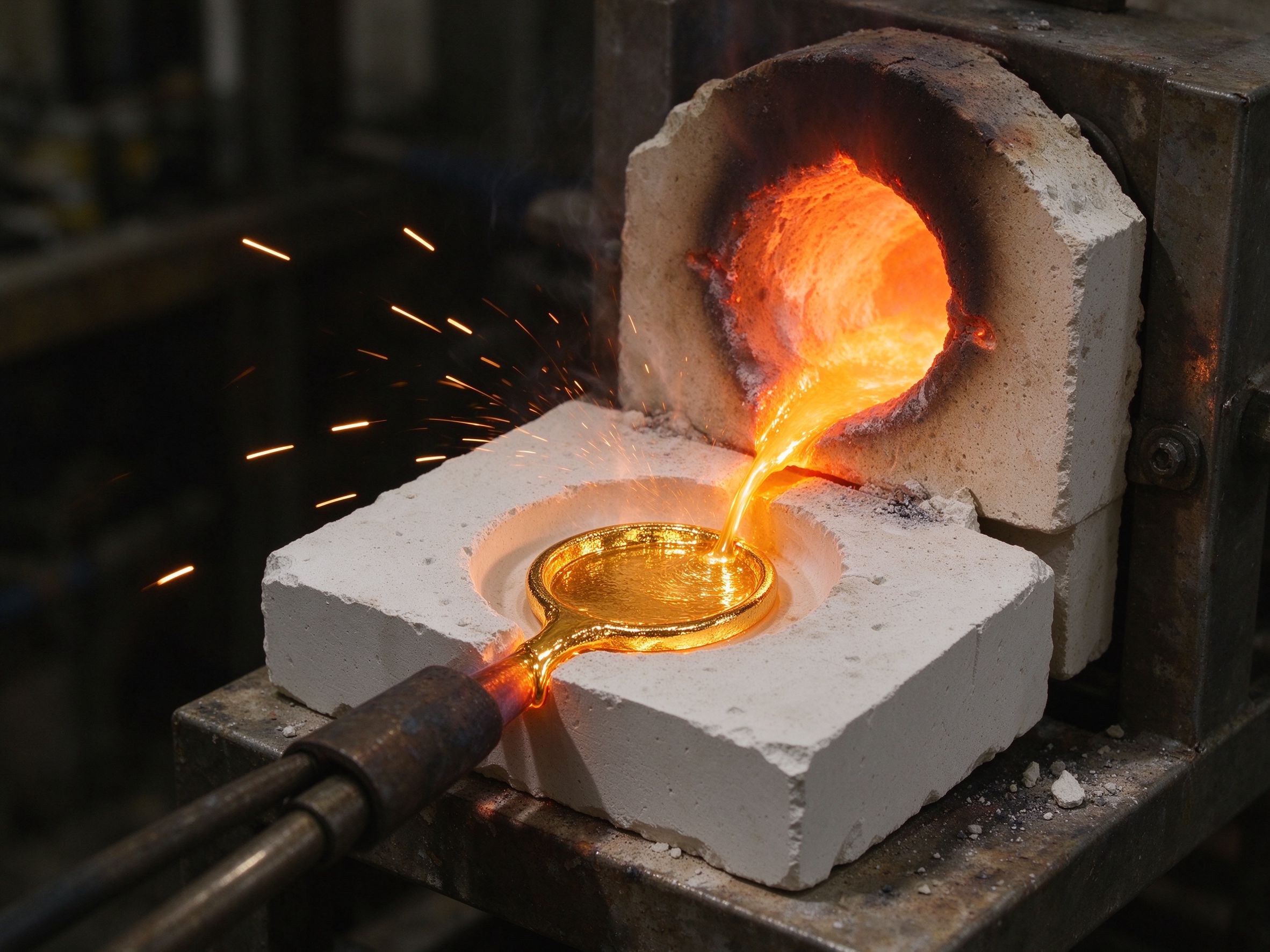
Commercial jewelry moissanite is grown using a method called the temperature gradient solution growth (TGSG) or a modified physical vapor transport (PVT) process. The raw materials are high-purity silicon and carbon powders, placed in a sealed graphite crucible. The crucible is heated to approximately 2,200 to 2,500 degrees Celsius in an argon atmosphere.
At these temperatures, silicon and carbon react to form SiC vapor. The vapor condenses on a seed crystal placed at the cooler end of the crucible. Over several weeks, a cylindrical boule of single-crystal SiC grows on the seed. The boule is typically 12 to 25mm in diameter and 20 to 50mm long.
Once the boule is removed from the furnace, it is sliced into slabs using a diamond saw. The slabs are then cut into gemstone shapes using diamond tools. The entire process from powder to finished gem takes about 4 to 6 weeks.
Why Moissanite Is So Affordable
Compared to diamond, moissanite is remarkably affordable. A 6.5mm (1ct equivalent) D-color VVS moissanite costs $25 to $45 wholesale. A comparable natural diamond costs $2,800 to $4,500. The price difference is not because moissanite is "fake." It is because the production economics are completely different.
Diamond mining requires extracting tons of ore to find a single carat of gem-quality stone. Moissanite is grown in a controlled factory where every crystal is gem-quality by design. There is no mining waste, no geological uncertainty, and no supply scarcity. The cost is primarily labor, energy, and equipment depreciation.
For wholesale buyers, this means moissanite offers consistent, predictable pricing that does not fluctuate with commodity markets. You can build a jewelry line on moissanite without worrying about diamond price volatility.