The heart cut is the most emotional shape we cut and the easiest to get wrong. A well-proportioned heart is instantly recognizable and romantic; a lopsided one reads as a mistake. Because the shape is symbolic, customers are unusually sensitive to whether it "looks like a heart." This guide explains the proportions our cutters use so you can judge a heart moissanite and stock the ones that sell.
The parts of a heart cut
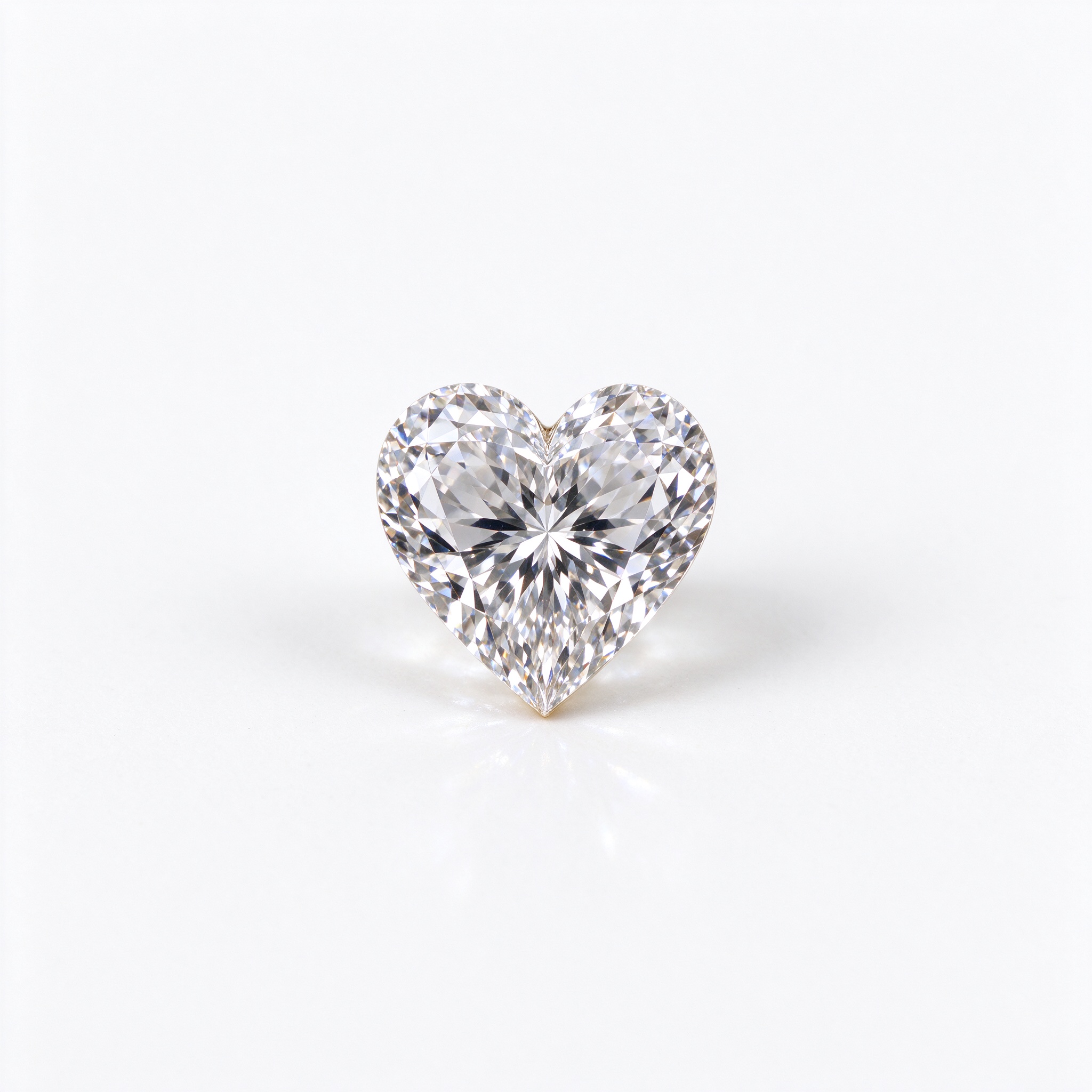
A heart cut is a brilliant shape: two rounded lobes (the "wings") on top, a cleft between them, and a point at the bottom. For it to read as a heart, all three parts must balance. If the cleft is too deep, it looks pinched; too shallow and it looks like a round; if one wing is larger, it looks lopsided. Symmetry is the entire game.
The length-to-width ratio
We cut hearts to a balanced ratio near 1:1 to 1:1.1. A heart that is too tall looks like a teardrop; too wide and the cleft looks squashed. Around 1:1 gives the classic, recognizable heart silhouette. When you order hearts, confirm the target ratio so the shape photographs true.
The cleft and wings
The cleft at the top should be defined but not deep. The two wings must be equal in size and curve. Under QC, we rotate the heart to check the wings mirror each other. Any heart with a visibly uneven wing goes back for correction. This hand-finishing is why hearts sit at a premium over simpler shapes, but it is what makes the piece sell.
Clarity and color
Hearts are brilliant cuts, so they hide minor inclusions well. VS is usually eye-clean. Color: D-F for white metal; hearts are often used in rose-gold promise pieces, where F-G reads warm and romantic. Our heart range includes sizes like the 1ct heart and 1.5ct heart.
How we QC heart symmetry
After cutting, every heart is inspected face-up. We check that the point sits centered below the cleft, that the wings are even, and that the cleft is clean. We also check light return, because a shallow heart can look dark in the center. This is part of the workflow in our QC guide.
Settings for hearts
Hearts are most often set as pendants, promise rings and earrings. The point needs a small protective setting. In a pendant, the heart hangs point-down by gravity. In a ring, a solitaire heart with the cleft up is the romantic classic. Protect the point with a small prong. For styling ideas, read our heart promise and pendant guide.
Quick FAQ
Do hearts sparkle? Yes, they are brilliant-cut, so they fire well once well proportioned.
What size reads best? 0.75 to 1.5ct, where the heart shape is clearly visible.
Can you cut a custom ratio? Yes, specify on the custom cut page.
Why a balanced heart is hard to cut
A heart has to read as a heart from every rotation, not just one angle. That demands perfectly even wings, a centered point and a clean cleft. If the wings are even slightly unequal, the stone looks lopsided. This is why hearts sit at a premium: they take more hand work and more rejects. We inspect every heart face-up and rotate it to confirm symmetry before it ships. A cheap heart that looks "almost right" is the most common return we see in this shape.
Color and clarity for hearts
Hearts are brilliant cuts, so they hide minor inclusions well; VS is eye-clean. Color depends on the metal: D-F for white gold, F-G for rose or yellow gold, where warmth reads romantic. Because hearts are often given as gifts in rose gold, F-G is a popular choice. See the tiers in color and clarity.
Marketing the heart correctly
Sell the emotion, not the specs. A heart buyer is buying meaning. Show the balanced silhouette, describe the clean cleft, and keep packaging gift-ready. Stock the 1ct heart and 1.5ct heart, and offer matched pairs for earrings. For merchandising ideas, read our promise and pendant guide.
Why we reject lopsided hearts
A heart that looks "almost right" reads as wrong. Because the shape is symbolic, customers judge it emotionally. We reject any heart with uneven wings or a tilted point. This keeps returns low. It costs us rejects, but it protects your reputation. A balanced heart is the only heart worth selling. See the heart range.
Checking a heart sample yourself
When a heart arrives, rotate it on a white tray. The wings should mirror; the point should center. Photographs can flatter a lopsided heart, so inspect the physical stone. This takes seconds. We expect buyers to do this before bulk ordering. The promise ring guide shows how hearts sell.
Inspecting heart symmetry on arrival
Rotate each heart on a white tray. The wings must mirror and the point must center. Reject any lopsided one. We QC for this, but verifying samples protects your gift sales. Start with a sample heart, confirm, then bulk order. See the heart range.
Why we reject lopsided hearts
A heart that is almost symmetric still reads as wrong, because the shape is symbolic. We reject any heart with uneven wings or a tilted point. This keeps returns low and protects your reputation. A balanced heart is the only heart worth selling, and customers notice the difference. When you display a well-cut heart, it sells itself.
Inspect samples on a white tray, rotating the stone. Start with one sample heart, confirm the symmetry, then order the gift range. Matched pairs for earrings come from the same batch. See the heart range and start on custom cut.
Ordering balanced hearts
Start with one sample heart and rotate it on a white tray to confirm the wings mirror and the point centers. Once it passes, order the gift range. Matched pairs for earrings come from the same batch. Every heart ships GRA-certified. See the heart range and start on custom cut.
When you order hearts, ask for face-up photos so you can confirm the symmetry before shipment. We reject uneven stones, but seeing the exact piece yourself removes any doubt.